Kameleoon Ships Copy to Figma for Winning Test Variations
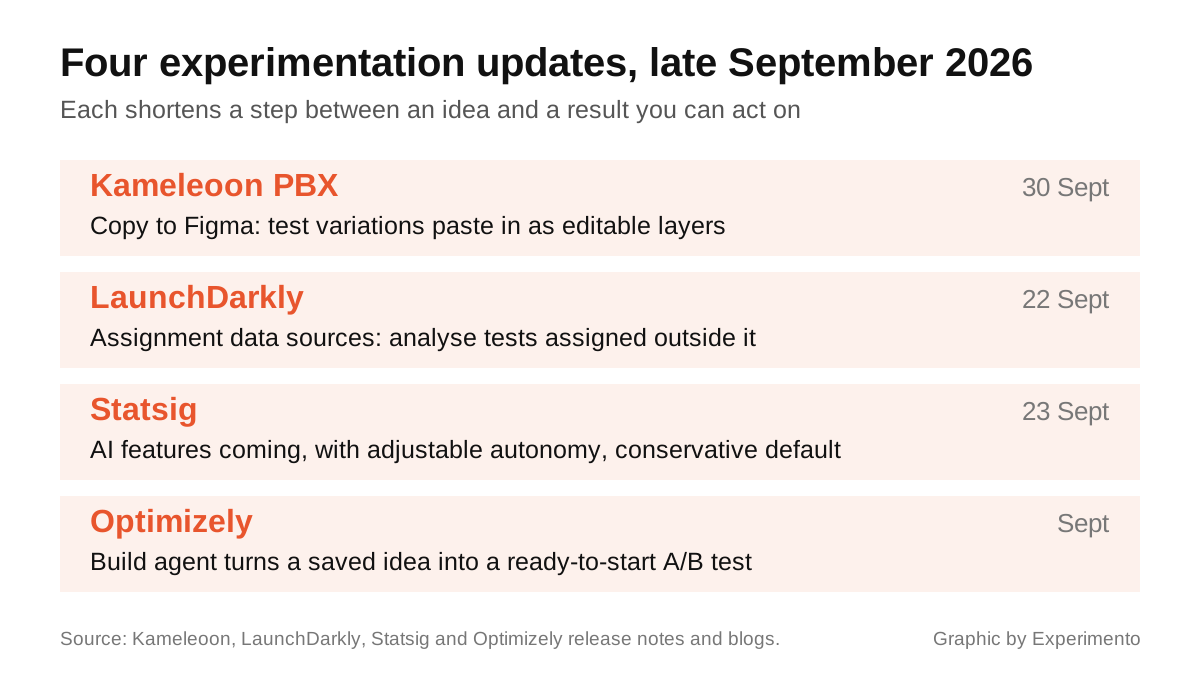
Most of what shipped in experimentation tools over the last fortnight is plumbing rather than headline features, and that is the useful kind. A winning variation can now travel back to the design file, a warehouse-native tool can analyse tests it did not assign, and one vendor has said out loud how much it will let its AI do without asking.
Kameleoon: copy a PBX variation straight into Figma
On 30 September Kameleoon added Copy to Figma to PBX Build, its prompt-based variation builder. Any variation, winning or not, can be copied from the “Your version is ready” card or from the Experiments dashboard and pasted into a Figma file as regular, editable layers. There is no plugin to install and no account to connect. PBX Build could already turn a Figma mockup into a testable variation, so the loop now runs both ways.
The problem it solves is real and rarely discussed. When a test wins, the design file usually still shows the version that lost, and the next test on that page starts from a stale baseline until someone rebuilds the winner by hand. Getting the winner into the source of truth quickly matters more than it sounds, because it is where most of the institutional memory from a CRO programme quietly leaks away. Kameleoon’s own caveats are worth noting: it works best on simple, mostly static variations, interactive elements may not come across cleanly, and it only copies the part of the page PBX built. Details on the Kameleoon blog.
LaunchDarkly can now analyse tests it did not assign
LaunchDarkly’s documentation changelog records that on 22 September it published new topics on assignment data sources for its warehouse-native experimentation. Normally LaunchDarkly works out who saw which variation from its own SDK flag evaluations. An assignment data source replaces that with a query against your own warehouse, so you can measure experiments where assignment happened somewhere else, such as an email platform or a marketing tool. One data source can be reused across experiments in the same project and environment.
The trade-off is spelled out: these experiments do not use a flag, so they cannot use LaunchDarkly’s targeting rules, and they must use warehouse-native metrics. For teams that run email subject-line tests or paid-media splits in one tool and product tests in another, this is a way to get one statistics engine and one set of metric definitions across all of them, which is a bigger win than any single feature. Our comparison of A/B testing tools covers which platforms are warehouse-native and why that matters. See LaunchDarkly’s docs on assignment data sources.
Statsig sets out how far its AI will go on its own
On 23 September Statsig published “Our take on AI for experimentation”, saying several AI features are launching soon in its console. The substance is in the guardrails. Statsig says its AI features will only look at real data and will show their working so users can check them; that agentic features will come with customisable autonomy levels, from “don’t do anything” up to fully automatic, with a conservative default; and that AI is optional. Today the scope is narrow, for example an AI hypothesis advisor that reviews a hypothesis you have written and suggests changes.
The post is also candid about where AI does not help much. Creating an experiment, Statsig says, takes about five minutes already; the bigger gains are in writing the code, analysing results and prioritising what to test next. That is the right instinct. If you are evaluating AI features in any tool, ask what the default autonomy setting is and whether you can trace every number back to source. A sharp hypothesis framework still does more for result quality than any assistant. Read it on the Statsig blog.
Optimizely’s Idea builder can now build the test as well
Optimizely’s 2026 Web Experimentation release notes list a September addition: a Build agent inside the Idea builder that turns a saved or draft idea into a complete A/B test. Opal creates the variation, then suggests a primary metric and an audience for you to review before starting the experiment.
Review is the operative word. The primary metric decides whether a test wins or loses, so a suggested one should be checked against what the idea was meant to change, not accepted because it was filled in for you. If you are weighing Optimizely against cheaper options, our Optimizely alternatives page is the place to start. Release notes at Optimizely support.
More from Experimento
related resultsBest A/B Testing Tools in 2026, Compared by What They Actually Do
A practical 2026 comparison of the best A/B testing tools by what each one is actually good at, from Optimizely and VWO to GrowthBook and PostHog.
read result →A/B Testing Tools Compared: Which Platform Fits Your Team
A/B testing tools compared for 2026: VWO, Optimizely, AB Tasty, Convert, GrowthBook, Statsig and PostHog, matched to marketing, CRO and engineering teams.
read result →Data-Driven Design: Let Research Guide Your Product Decisions
A practical guide to data-driven design: how to pair analytics with user research, run honest tests, and make product decisions on evidence, not opinion.
read result →