UX Designer Salary in the UK: What to Expect at Every Level
If you are weighing up the field, the first thing to know is that UX designer salary in the UK moves a lot with seniority and location. A junior in a regional team and a UX director in London can be four times apart. This guide breaks down what each level realistically pays in 2026, why London skews the numbers, and the levers that actually move your pay. Figures below are blended from Glassdoor, PayScale and UK jobs-board data, so treat them as sensible ranges rather than a fixed rate card.
UX designer salary by level (2026)
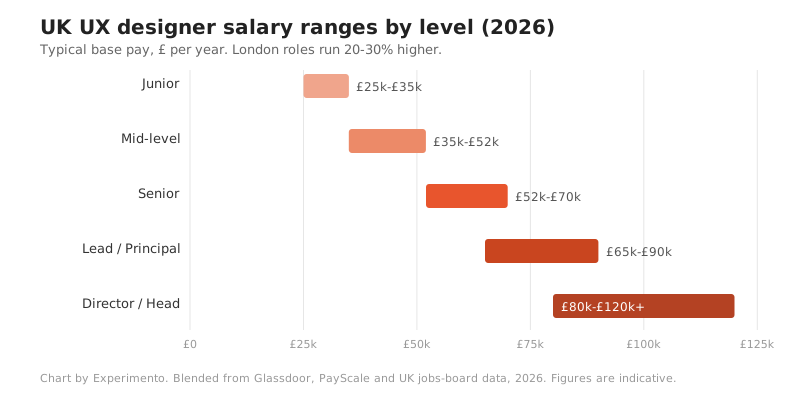
The chart above shows the typical base-pay bands. In numbers:
| Level | Typical UK range | Rough midpoint |
|---|---|---|
| Junior UX designer | £25,000-£35,000 | £30,000 |
| Mid-level UX designer | £35,000-£52,000 | £45,000 |
| Senior UX designer | £52,000-£70,000 | £65,000 |
| Lead / principal UX designer | £65,000-£90,000 | £75,000 |
| Director / head of UX | £80,000-£120,000+ | £100,000 |
These are base salaries. Total compensation can be higher once you add bonuses, and in some product companies, equity or share options. For a government reference point, the National Careers Service UX designer profile also publishes an indicative pay range.
Junior UX designer (0-2 years)
Entry-level roles cluster around £25,000 to £35,000. At this stage you are usually working inside a team, running smaller pieces of research, building wireframes and prototypes, and handing off to more senior designers. Bootcamp graduates and career-changers typically start at the lower end; a strong portfolio and a relevant degree push you higher.
Mid-level UX designer (2-5 years)
Once you can own a feature end to end, from research through testing to handoff, you move into the £35,000 to £52,000 band. This is the widest, most competitive part of the market, and the point where specialising (research, interaction design, or design systems) starts to pay off.
Senior UX designer (5+ years)
Senior designers, typically £52,000 to £70,000, lead the design on significant products, mentor juniors, and shape how decisions get made rather than just executing them. In London, senior designers with five or more years often reach £70,000 to £80,000.
Lead, principal and director
Beyond senior, pay splits into two tracks. Lead and principal designers (£65,000-£90,000) stay hands-on but set direction across multiple projects or a design system. Head of UX or design director roles (£80,000 to £120,000 and up) are management positions accountable for a whole design function, hiring, and strategy.
The London premium is real
Location is the single biggest non-seniority factor. London roles typically pay 20-30% more than the national average for the same title, reflecting both higher living costs and a denser concentration of well-funded product companies. That premium narrows for fully remote roles, where some companies pay a national rate regardless of where you live. Manchester, Bristol, Edinburgh and Leeds have growing design markets that pay above the regional average but below London.
UX vs UI vs product designer pay
The titles overlap and so does the money:
- UI designer salaries track closely to UX, sometimes slightly lower at junior level because the role is narrower.
- Product designer is often the best-paid of the three at the same experience level, because it bundles UX, UI and product thinking. Many senior UX designers rebrand as product designers partly for this reason.
- UX researcher and design systems specialists command a premium at senior level because the supply of experienced people is thinner.
What actually moves your salary
Seniority and location aside, five things reliably lift pay:
- A portfolio that shows outcomes, not just screens. Case studies that connect design decisions to measurable results are what justify a higher band. This is the same test-and-learn habit that separates strong teams from guessers.
- Specialising in research, design systems or a regulated domain (fintech, health) where fewer designers can operate.
- Moving companies. In-role raises rarely match the jump you get by switching, especially from agency to in-house product.
- Sector. Fintech, enterprise SaaS and consultancies generally pay more than charities, the public sector or early-stage startups.
- Negotiating on total compensation, not just base, including bonus and any equity.
If you are still deciding whether the path is for you, our explainer on what user experience design is covers what the day-to-day work involves, how to become a UX designer maps the routes in, and our roundup of UX designer jobs shows what employers are actually hiring for.
Frequently asked questions
What is the average UX designer salary in the UK? Across all levels the average sits around £45,000 to £50,000, but that number hides a wide spread: juniors earn from about £25,000 while directors of UX exceed £100,000. Where you sit depends mostly on seniority and whether you are in London.
How much does a junior UX designer earn in the UK? Typically £25,000 to £35,000, with bootcamp graduates and career-changers usually starting at the lower end and those with strong portfolios or relevant degrees nearer the top.
Do UX designers earn more in London? Yes. London roles usually pay 20-30% more than the national average for the same title. Fully remote roles sometimes pay a flat national rate, which narrows the gap.
Is UX design a well-paid career in the UK? It pays above the national median wage even at mid-level, and senior and leadership roles are well into six figures at the top. Pay growth is strongest for those who specialise or move into product design.
Does a product designer earn more than a UX designer? Usually a little more at the same experience level, because the product designer role bundles UX, UI and product strategy. Many senior UX designers move to a product designer title partly for the pay.
How can I increase my UX designer salary? Build a portfolio that shows business outcomes, specialise in a scarce skill like research or design systems, move companies rather than waiting for internal raises, target higher-paying sectors, and negotiate on total compensation including bonus and equity.
More from Experimento
related resultsBest A/B Testing Tools in 2026, Compared by What They Actually Do
A practical 2026 comparison of the best A/B testing tools by what each one is actually good at, from Optimizely and VWO to GrowthBook and PostHog.
read result →A/B Testing Tools Compared: Which Platform Fits Your Team
A/B testing tools compared for 2026: VWO, Optimizely, AB Tasty, Convert, GrowthBook, Statsig and PostHog, matched to marketing, CRO and engineering teams.
read result →Data-Driven Design: Let Research Guide Your Product Decisions
A practical guide to data-driven design: how to pair analytics with user research, run honest tests, and make product decisions on evidence, not opinion.
read result →